The 10 Second Review
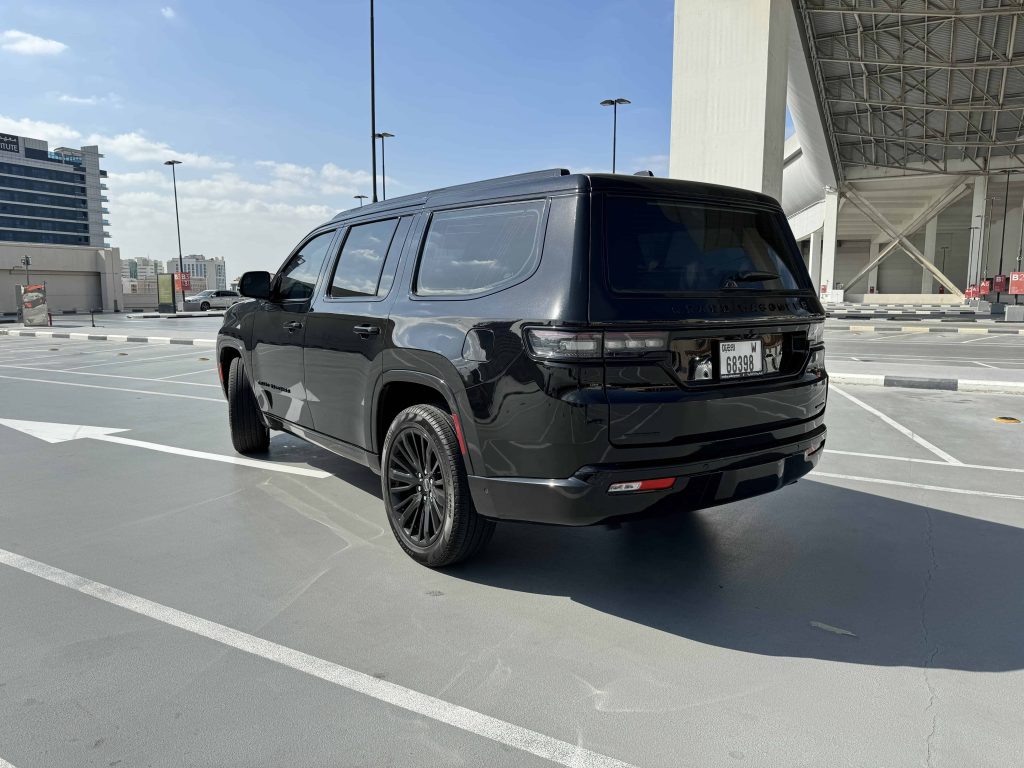
The Jeep Grand Wagoneer, Jeep’s second-most-iconic vehicle after the WWII Jeep, was introduced in 1963 and remained in production until the early Nineties. However, the modern Grand Wagoneer bears little resemblance to its predecessor. In contrast to the older models, today’s Grand Wagoneer is much larger in scale, being about two-and-a-half feet longer (or three-and-a-half feet longer for the stretched L version). Additionally, it boasts a level of luxury that surpasses the previous generation, placing it in the same league as other full-size luxury SUVs such as the Cadillac Escalade and Lincoln Navigator.
/t
Table of Contents
Pros
- Very Spacious
- Magic Carpet Like Ride
- Luxurious Interior
- High End Materials
Cons
- Fuel Efficiency
- Bulky Maneuverability
The In-Depth Review
Engine, Transmission, and Performance

The Hurricane engine, a 510-horsepower twin-turbo 3.0-liter inline-six, outperforms the now-discontinued 6.4-liter V-8 with more power and a slightly improved fuel efficiency. It comes paired with an eight-speed automatic transmission. The Grand Wagoneer includes Jeep’s Quadra-Drive II four-wheel-drive system as a standard feature, complete with a two-speed transfer case featuring low range, hill-descent control, and an electronically locking rear differential. Riding on air springs (optional for the regular Wagoneer), the Grand Wagoneer has the flexibility to adjust its ride height, capable of raising it by up to 3.6 inches or lowering it by half an inch. With 10 inches of ground clearance, the ability to ford up to two feet of water, and a robust maximum towing capacity of 9,860 pounds, the Grand Wagoneer showcases impressive capabilities.
While the Grand Wagoneer provides a smooth and refined ride on highways, the inherent pickup-truck structure contributes to a slightly bumpy experience on uneven roads. Moreover, its substantial size hampers agility in tight spaces, and on winding roads, it exhibits noticeable body roll, exacerbated by the light and imprecise steering feedback.
Interior, Comfort, and Cargo
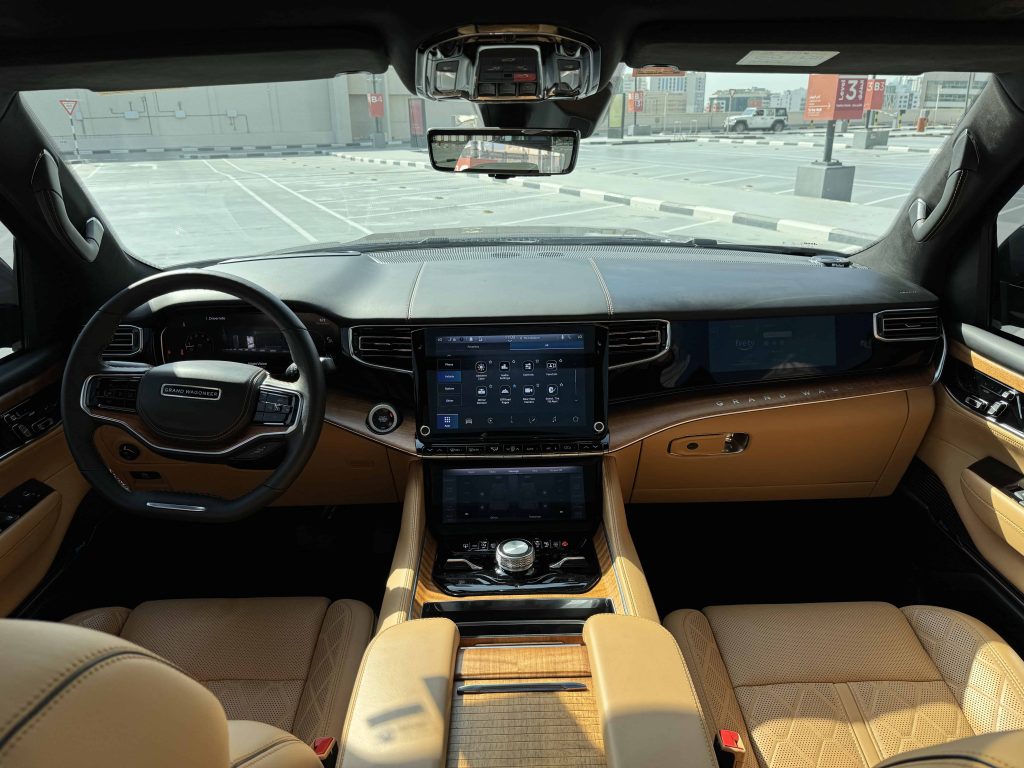
The standard three-row seating in the Grand Wagoneer, accommodating seven or eight passengers, doesn’t fully capture the interior’s sophistication. The third row, tailored for adults, goes beyond expectations with an optional power-reclining backrest and a skylight. Standard features include a pair of second-row captain’s chairs, although a bench seat is available for maximum passenger capacity. The extended L version, while not essential, provides extra cargo space behind the third row—44 cubic feet compared to the standard model’s 27. Folding the rear seats in the L version expands the cargo capacity to 89 cubic feet, while the standard Grand Wagoneer offers 71 cubic feet.
Inside, genuine walnut or aluminum trim adorns the front, complemented by numerous screens throughout. The interior pays homage to the original Grand Wagoneer with “Easter eggs,” such as a vintage two-spoke steering wheel and an “EST. 1963” inscription visible on the dashboard edge upon opening the door. The opulent Grand Wagoneer also features customizable ambient interior lighting, a head-up display, a camera-fed rearview mirror, and a rear-seat monitoring system that projects a video feed onto the central touchscreen.
Infotainment and Connectivity
A striking feature of the Grand Wagoneer lies in its elaborate infotainment system. The Jeep’s dashboard is adorned with an array of screens. All models come equipped with digital instrumentation and a 12.0-inch central touchscreen. Beneath it, there’s an additional 10.3-inch touchscreen dedicated to HVAC controls. The two upper trims boast yet another 10.3-inch touchscreen for the front-seat passenger, offering redundant audio and navigation controls or the option to stream entertainment.
Navigating this system may require a substantial amount of time spent familiarizing yourself with its various components. Noteworthy standard features encompass a subscription-based Wi-Fi hotspot, wireless Apple CarPlay and Android Auto, and USB ports in all three rows. Second-row passengers enjoy an extra 10.3-inch touchscreen situated between the captain’s chairs, and opting for the rear-seat entertainment system introduces a pair of 10.1-inch touchscreens. Every Grand Wagoneer comes with a potent McIntosh stereo, while the Series II Obsidian and Series III feature an even more powerful 1375-watt unit with 23 speakers.
Price tested at AED 515,900
“It’s a welcomed relaunch of the car that pioneered the luxury SUV segment.”