Chinese automakers are rapidly reshaping the global automotive landscape, capturing a significant share of international markets. Driven by competitive pricing, robust technological advancements, and strategic expansions, China has emerged as a formidable player in the global auto industry.
Market Penetration and Growth
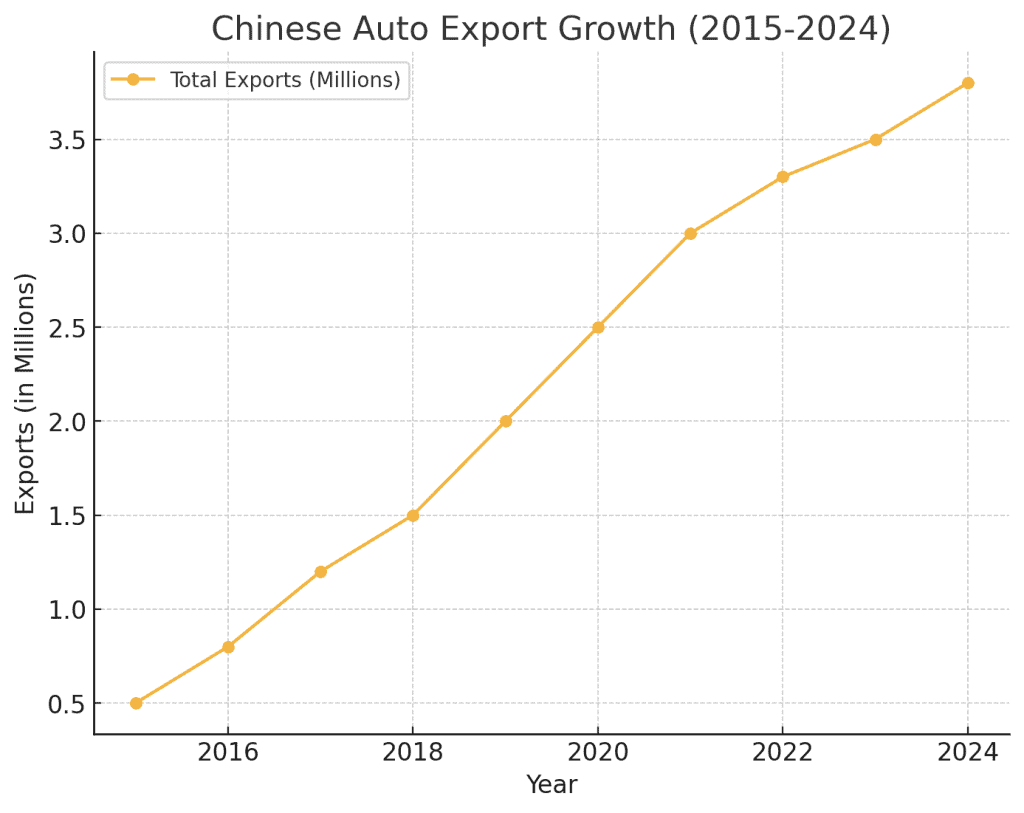
In 2024, Chinese automobile exports surged to a record 3.8 million units, representing a 30% year-on-year growth, according to data from the China Association of Automobile Manufacturers (CAAM). This remarkable feat positioned China as the world’s largest car exporter, overtaking traditional leaders such as Germany and Japan.
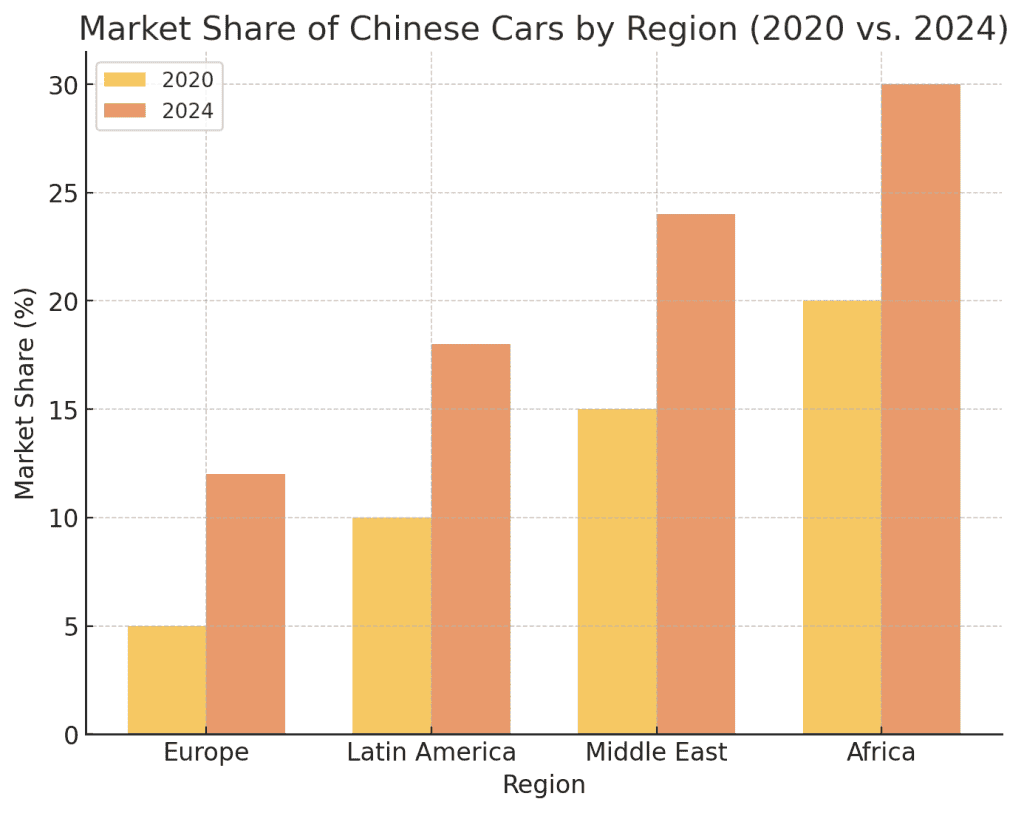
The market share of Chinese vehicles in Europe grew to 12% in 2024, a stark increase from just 5% in 2020. Similarly, in Latin America, Chinese automakers now hold a commanding 18% market share, up from 10% in 2020. Notably, Middle Eastern and African markets have also witnessed a rise, with shares climbing to 24% and 30%, respectively.
Factors Driving Success
- Competitive Pricing: Chinese automakers like BYD, Geely, and Changan have capitalized on their cost advantages, offering high-quality vehicles at lower prices compared to Western and Japanese competitors.
- EV Leadership: China’s dominance in electric vehicles (EVs) is unparalleled. With companies like BYD and NIO leading the charge, EV exports accounted for 40% of all Chinese car exports in 2024. Europe, in particular, has become a key market for Chinese EVs, driven by strong demand for sustainable and affordable alternatives.
- Strategic Partnerships: Collaborations with local distributors and investments in overseas manufacturing plants have enabled Chinese brands to establish stronger footholds in foreign markets. For example, Geely’s acquisition of Volvo and its partnership with Daimler have enhanced its global reputation.
- Technological Advancements: Chinese automakers have heavily invested in AI-driven autonomous vehicles, battery technology, and infotainment systems, creating products that appeal to tech-savvy consumers worldwide.
| Region | Market Share (2020) | Market Share (2024) | Key Brands |
| Europe | |||
| Latin America | 18% | Chery, Great Wall Motors | |
| Middle East | 15% | 24% | Changan, BAIC |
| Africa | 20% | 30% | FAW, Dongfeng |
Challenges Ahead
Despite their success, Chinese automakers face significant challenges:
- Regulatory Hurdles: Stricter emission standards and safety regulations in Europe and the U.S. could slow down market penetration.
- Brand Perception: Chinese brands still need to overcome lingering skepticism about quality and reliability in some regions.
- Geopolitical Risks: Trade tensions and tariffs could impact exports to key markets, particularly the U.S.
Future Outlook
Analysts predict that by 2030, Chinese automakers could command over 20% of the global automotive market share, driven by continued expansion in EVs and further advancements in technology. Investments in AI, green energy, and autonomous driving are expected to solidify their position as industry leaders.
China’s meteoric rise in the global automotive market underscores its growing influence and capability to innovate. With EVs leading the charge, Chinese automakers are poised to redefine the future of mobility.